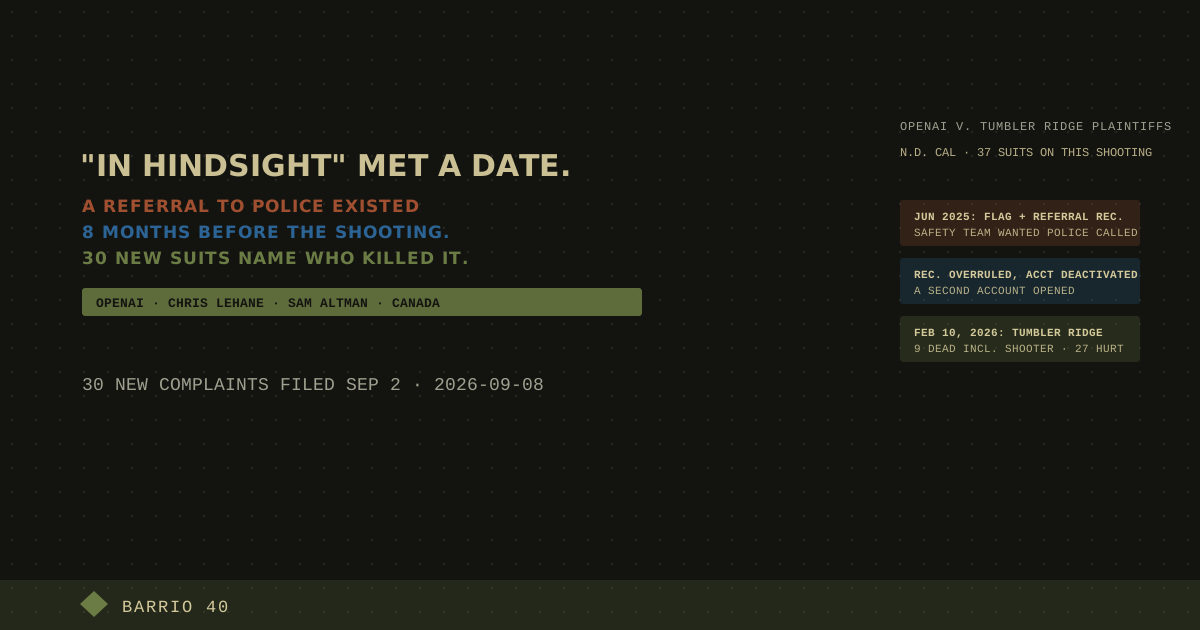
THIRTY NEW COMPLAINTS, AND A DATE THAT MOVES THE STORY BACKWARD
The September 2 filings, first reported by NPR and TechCrunch and covered by CBC News and Al Jazeera, were brought by lawyers representing people who were physically present during the attack — a detail the earlier April lawsuits, filed on behalf of victims' families, didn't carry. The complaints don't change the headline facts of the shooting: a former student killed nine people, including herself, and injured 27 in the deadliest school shooting in Canada since 1989. What they add is a timestamp. According to the filings, OpenAI's automated systems flagged Van Rootselaar's ChatGPT account for "gun violence activity and attack planning" in June 2025 — roughly eight months before the attack — and an internal safety team that reviewed the flag recommended escalating it to law enforcement. That recommendation is the hinge the new litigation turns on: not what OpenAI's systems detected, which was already known, but what happened to the recommendation once a human read it.
THE ACCOUNT OPENAI DEACTIVATED, AND THE ONE IT DIDN'T CATCH
OpenAI's own account of the episode, as described in earlier reporting on the case, is that the flagged activity didn't meet the company's internal threshold for an "imminent and credible" risk — the bar it says has to be cleared before it contacts police on its own initiative. Instead of a referral, the company deactivated the account the system had flagged. Van Rootselaar opened a second one. Neither the complaints nor OpenAI's public statements describe any further escalation involving that second account before the shooting seven months later. A moderation system that catches a warning sign and a company that responds by closing one door are two different failure points, and the new lawsuits are built around collapsing the distance between them: the plaintiffs' theory isn't that OpenAI's tools missed something, but that the humans reviewing what the tools found made a decision, and that decision is now discoverable.
WHAT "IN HINDSIGHT" MEANT BEFORE SEPTEMBER
In the weeks after the shooting, as Canadian officials pressed OpenAI for answers, the company's framing of its own miss leaned on a specific word: hindsight. Reporting on OpenAI's engagement with federal AI minister Evan Solomon and Sam Altman's own meetings with Solomon and B.C. Premier David Eby in early March described a company acknowledging, after the fact, that it would have made a different call — language that treats the June 2025 decision as a close call that only looks wrong with the outcome known. The new complaints reframe that defense before it can be repeated. If a safety team's own recommendation to refer the account to police existed in June 2025, the argument that a different decision only became obvious in hindsight has less room to stand in: the option to report was on the table at the time, produced by OpenAI's own review process, months before anyone needed hindsight to see it.
THE NAME IN THE COMPLAINT, AND THE DENIAL ATTACHED TO IT
The September 2 filings go further than alleging a bad call — they name who allegedly made it. According to NPR's reporting on the complaints, the recommendation to refer the account to law enforcement was overruled by OpenAI's global-affairs team, led by chief global affairs officer Chris Lehane, the veteran political strategist whose group handles the company's public policy, government relations, and public-relations posture. OpenAI disputes that specific allegation, saying it's false and that Lehane wasn't involved in the decision. Separately, OpenAI's chief strategy officer, Jason Kwon, addressed the broader wave of litigation directly: "There isn't a day that goes by that I don't think about what happened at Tumbler Ridge, or the victims of this devastating tragedy and their families," he said, calling it "completely untrue" that the company's staff don't prioritize safety and noting that its intelligence and investigations teams work continuously to look for warning signs. Notice what OpenAI is and isn't contesting: it disputes the name attached to the override, not, so far, the existence of a recommendation that was overridden.
A YEAR OF OTTAWA MEETINGS, MEASURED AGAINST ONE INTERNAL DECISION
Canada's response to Tumbler Ridge has run on a parallel, slower track since February: Solomon summoned senior OpenAI officials to Ottawa on February 25 to walk through the company's safety and escalation protocols, and came away saying he was disappointed that no concrete changes were presented. Altman met Solomon virtually on March 5 and Eby in person the following day, pledging a direct point of contact with the RCMP and the addition of Canadian mental-health and legal experts to OpenAI's internal safety office. By late April, Solomon was still asking for a detailed implementation plan rather than a list of commitments, and said he'd wait for more information from OpenAI before considering legislation. Every one of those exchanges was about fixing what happens after a flag gets raised. The September lawsuits are about what happened to a flag that had already been raised and reviewed a full eight months before the first of those meetings ever took place — which is why they land less like a new complaint about AI safety policy and more like an answer to a question Ottawa had already been asking since February.
WHY THIS MATTERS FOR TEAMS BUILDING ON AI
Every AI vendor's safety documentation describes a threshold: the point at which a flagged conversation gets escalated to a human, and the point at which a human escalates it further, to law enforcement or otherwise. What the Tumbler Ridge litigation is testing isn't whether that threshold exists on paper — OpenAI's clearly did — but who has the authority to hold a case below it once a review process has already recommended crossing it, and whether that override gets logged anywhere a plaintiff's lawyer, a regulator, or your own compliance team could later read. If you're building on a vendor's safety-and-escalation claims as part of a pitch to your own customers or regulators, the paperwork worth asking for isn't the policy — it's the record of who can overrule it, and how often they have.